
Edwardian Houses: Why They Still Stand Out Today
Edwardian houses have always been a favourite of mine. In my view, they represent one of the finest periods of housebuilding in England, and I am always pleased to see one in my survey diary for the week.
They were built over a relatively short window — roughly from the late 1890s through to the outbreak of the First World War — but they seem to strike a very good balance. They retain the solidity and craftsmanship of the Victorian period, but feel lighter, more spacious and generally easier to live in.
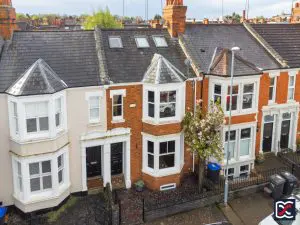
Across Northamptonshire, you see them in all sorts of forms — from more substantial town houses to attractive semis and terraces. They often sit on slightly wider plots and within streets that feel more open than later twentieth-century housing, which adds to their appeal.
Light, Space and a More Practical Approach
One of the biggest changes in the Edwardian period was a shift in how houses were planned. Compared with many Victorian houses, there is usually a noticeable move towards:
- larger windows and more natural light
- wider hallways and staircases
- better room proportions
- a stronger relationship between the house and the garden
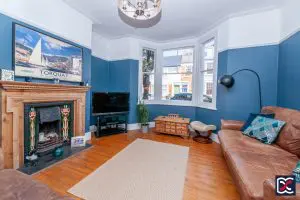
Well proportioned rooms and more natural light
There is also less of the heavy, sometimes overworked detailing you see in late Victorian buildings. The overall feel is a bit more relaxed and practical, without losing character. In simple terms, they tend to feel like houses designed to be lived in, rather than just displayed.
Materials and Workmanship
From a surveying point of view, Edwardian houses are often very reassuring. They are typically built with solid brick walls, lime mortars, timber windows and slate or clay tiled roofs. Even where defects have developed over time, the construction is usually logical and robust.
What also stands out is the general standard of workmanship. Many of the trades involved would have come through long apprenticeships, and that shows in the brickwork, joinery and plastering.
It is probably too strong to say that this level of skill disappeared entirely after this period, but it is fair to say that the conditions that supported it — time, labour and traditional training — became much less common as the twentieth century progressed.
A Mix of Influences — Without Being Overcomplicated
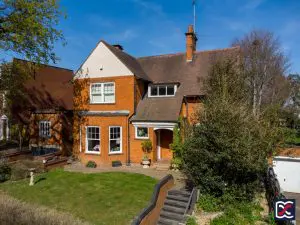
Another interesting aspect of Edwardian houses is that they do not follow a single rigid style. They draw on a mixture of influences — including Arts and Crafts ideas, earlier vernacular buildings and, in some cases, more classical forms. You will see this in features such as:
- bay windows and prominent gables
- timber detailing and occasional render panels
- decorative brickwork and chimneys
- leaded lights and sash windows
Despite that variety, most Edwardian houses feel fairly restrained. They are not usually trying too hard, which is part of their lasting appeal.
Why They Work So Well Now
Edwardian houses also tend to adapt well to modern living. The proportions are usually good enough to accommodate modern kitchens, open-plan arrangements and home working without needing to fight against the building. Extensions, particularly to the rear, can often be added in a way that feels natural. That is one of the reasons they remain so popular — they offer character, but they also work.
A Short Window in Time
The Edwardian period marks, in my view, the last phase of a great age of English housebuilding.
Then came the two world wars. A great many working-class tradesmen were killed, and with them died an extraordinary depth of practical skill and inherited knowledge. Those were not simply jobs; they were crafts, often built up over generations. Once that chain was broken, it was not easily repaired.
What followed was shaped increasingly by shortage, speed and economy. Materials became more constrained, building had to be done more quickly, and the old continuity of labour and workmanship was badly damaged. We have, in many respects, never fully got it back.
Looking After an Edwardian House
Edwardian houses generally respond best to a sensible, traditional approach to repair. They were built using breathable materials and relatively straightforward construction methods. Introducing hard cement mortars, modern impermeable finishes or overly aggressive alterations can cause more harm than good. In most cases, careful maintenance using compatible materials will give the best long-term results.
Looking at the Wider Picture
If you are interested in how architecture evolved toward the Edwardian house, I have covered the earlier periods of English domestic architecture in a separate article:
House Design and Architecture Through the Ages
This slightly longer piece looks at the development of housing from the Tudor period through to the Victorian era, which helps explain the background and influences that shaped Edwardian houses in the years that followed.